Patmos
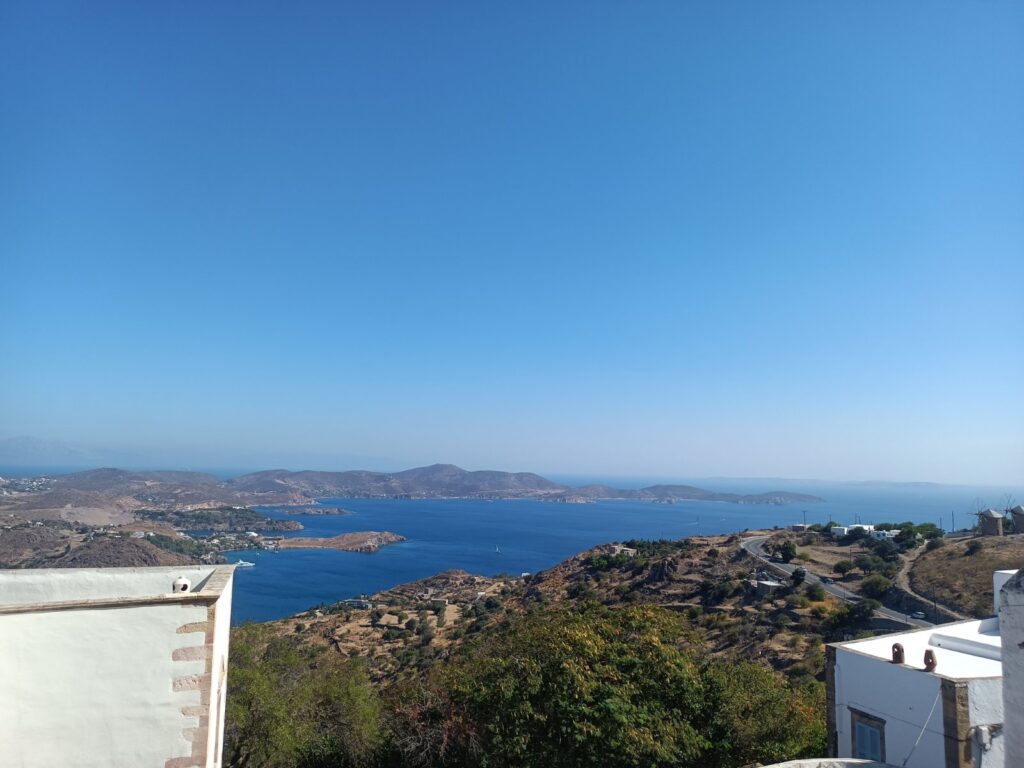
Patmos is not simply the setting of Codex and Code. Its historical landscape, monastic culture and manuscript heritage form an integral part of the programme’s educational design.
An island of texts and memory
Situated in the Dodecanese, Patmos has been shaped by a long history of religious, intellectual and cultural activity. The island is internationally associated with the Cave of the Apocalypse and with the Holy Monastery of Saint John the Theologian, founded in the eleventh century. Together with the historic settlement of Chora, these monuments are inscribed on the UNESCO World Heritage List.
The Monastery and its Library
Participants will stay in Skala, the island’s port and principal centre of everyday activity. Most teaching takes place at the Patmion Cultural Centre in Skala. Organised transfers connect Skala with the Monastery Library in Chora for the manuscript-based morning sessions.
Skala and Chora
Participants will stay in Skala, the island’s port and principal centre of everyday activity. Most teaching takes place at the Patmion Cultural Centre in Skala. Organised transfers connect Skala with the Monastery Library in Chora for the manuscript-based morning sessions.
Study visits
The programme includes visits to the Cave of the Apocalypse and the Archaeological Museum of Patmos, as well as an island tour. These activities broaden the academic programme by placing the study of writing, material culture and cultural memory within the historical landscape of Patmos.
Visiting responsibly
Participants are asked to respect the religious character of the Monastery and the Cave of the Apocalypse, follow all instructions concerning access and photography, and wear clothing appropriate to active monastic and religious sites. Detailed guidance will be provided during the programme.